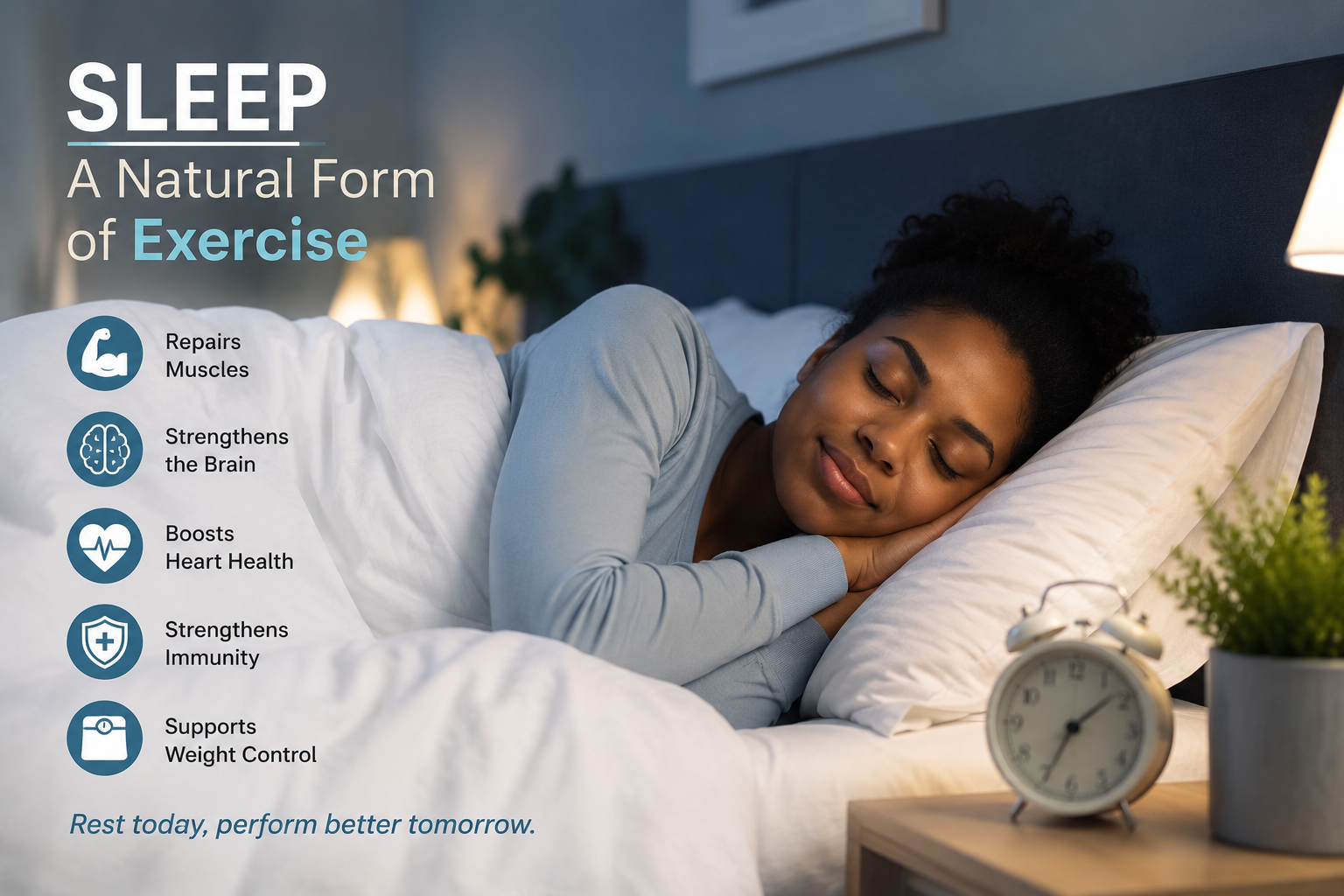
In a world where fitness is often associated with gym sessions, jogging, and intense workout routines, one of the most powerful health tools is frequently overlooked: sleep.
While sleep may appear passive, scientists and health experts increasingly recognize it as one of the body's most important restorative activities. During sleep, the body performs numerous functions that support physical health, mental well-being, and overall performance.
In many ways, sleep can be viewed as a natural form of exercise because of the vital work the body undertakes while we rest.
The Body Never Truly Sleeps
Although we may be unconscious during sleep, the body remains remarkably active. Essential repair processes take place throughout the night. Muscles recover from daily activities, damaged tissues are repaired, hormones are regulated, and the immune system strengthens its defenses against illness.
Sleep also helps regulate metabolism and energy use. During deep sleep, the body releases growth hormone, which supports cell regeneration and muscle recovery. This process is particularly important for athletes and individuals who engage in regular physical activity.
Sleep and Heart Health
Just as exercise benefits the cardiovascular system, quality sleep plays a crucial role in maintaining heart health. During sleep, blood pressure naturally decreases, giving the heart and blood vessels an opportunity to recover from the demands of the day.
Research has shown that inadequate sleep may increase the risk of hypertension, heart disease, stroke, and other cardiovascular conditions. Consistent, restorative sleep helps the body maintain healthy circulation and supports long-term heart function.
A Workout for the Brain
Sleep is equally important for mental performance. While we rest, the brain processes information, consolidates memories, and clears waste products that accumulate during waking hours.
People who get sufficient sleep often experience better concentration, improved decision-making, stronger memory retention, and greater emotional stability. On the other hand, sleep deprivation can impair cognitive function and increase stress levels.
In this sense, sleep acts as a form of mental conditioning, helping the brain stay sharp and resilient.
Weight Management and Metabolism
Many people focus on diet and exercise when trying to maintain a healthy weight, but sleep is often the missing piece of the puzzle.
Poor sleep can disrupt hormones that regulate hunger and appetite, leading to increased cravings and overeating. Studies suggest that individuals who consistently get enough sleep are more likely to maintain healthier body weights than those who are chronically sleep-deprived.
By supporting metabolism and hormonal balance, sleep contributes significantly to overall fitness and wellness.
Strengthening the Immune System
Another benefit of sleep is its ability to enhance the body's natural defense mechanisms. During sleep, the immune system produces proteins and cells that help fight infections and inflammation.
People who regularly sleep well tend to recover faster from illness and are generally more resistant to common infections. In contrast, insufficient sleep can weaken immunity and leave the body more vulnerable to disease.
Making Sleep a Priority
Health experts generally recommend that adults get between seven and nine hours of quality sleep each night. Establishing a consistent bedtime, reducing screen exposure before sleep, limiting caffeine intake in the evening, and creating a comfortable sleeping environment can all contribute to better rest.
In today's fast-paced society, many people sacrifice sleep in pursuit of productivity. However, neglecting sleep often reduces performance, weakens health, and undermines the benefits of diet and exercise.
Conclusion
Sleep may not involve lifting weights, running miles, or breaking a sweat, but it remains one of the most important activities for maintaining good health. It repairs the body, sharpens the mind, supports heart health, strengthens immunity, and promotes overall well-being.
Rather than viewing sleep as wasted time, it should be recognized as a natural and essential form of recovery that complements every aspect of a healthy lifestyle. Sometimes, the most beneficial thing we can do for our bodies is simply close our eyes and rest.




💬 Comments 0
Leave a Comment
No comments yet.
Be the first person to comment on this article.